Place, Identity, The Nature of Noticing, and Embodiment in our Writing
Meet the editor!
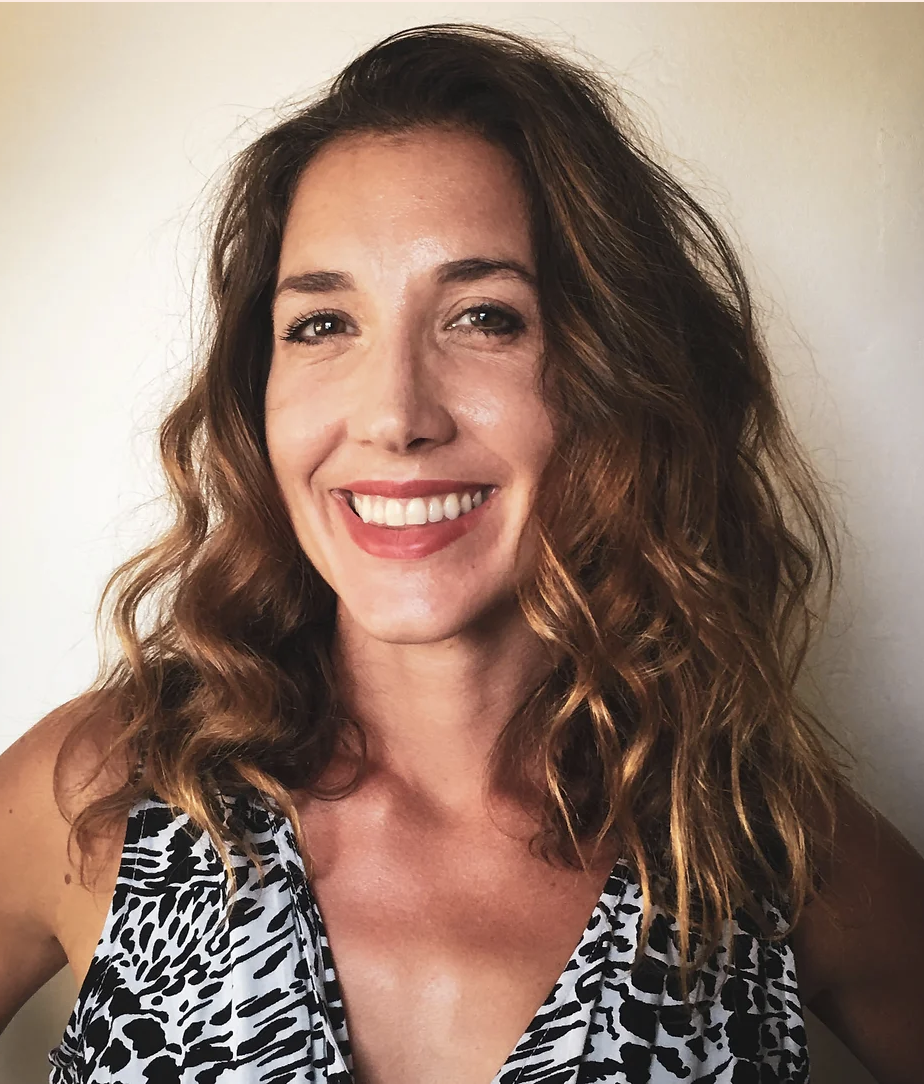
Hey y’all, my name is Zyen Mingo-Smoot or Mz.bambaataa, and I am very happy to be the editor of Revise This! I began my graduate journey two years ago, so I will be receiving my MFA this June! When I am not using poetry as a visionary tool for radical change, I am figuring out the best way to reconstruct how we think about language and literature on the academic level. It’s been a pleasure being your community newsletter editor.
Please contact zyen.smoot@wilkes.edu if you have any story suggestions, interview opportunities, or want to contribute!
Place, Identity, The Nature of Noticing, and Embodiment in our Writing
The conversation of place and identity occurs in many forms of creative expression. Maybe a professor has told you to “write what you know” or maybe you have been tasked to visit a place and take present notice of it. We have all experienced, or soon will experience, this moment of reflection rooted in, or really rooted from, our environments. Though how we approach these moments has the potential to be interpreted into something much more abstract—that is the intention, anyways.
After speaking with Aurora Bonner, a Maslow Creative Writing MFA Graduate of 2018, who recently presented at the Writers Conference of Northern Appalachia in Pennsylvania and Bay to Ocean Writers’ Conference in Maryland on place, identity, the nature of noticing, and embodiment in our writing, I asked:
How did you get involved with Wilkes?
“It was about 2016 and I heard of the program because Marlon James had recently won the Man Booker Prize. I was in my thirties. It [creative writing] was something I thought of doing for a long time. It was a big commitment because I had a full-time job, kids. Wilkes had a strong faculty, and the low-residency offered me flexibility. I was able to do that and keep up with my life at the same time. Although it completely changed my life for the better.”
How has the program inspired you?“It’s completely transformed my life. Being creative and living a creative life was something I always wanted to do. I talk about place; I grew up in a rural area. I kind of found a job wherever I could. [Wilkes] really gave me confidence that I could pursue this creative life, which I always dreamed of, although I did not think it possible because of the way I lived.”
-Finding that balance between showing the beautiful things, but showing the difficult as well. When we can notice both, that becomes more true.
At this point, as someone who was raised in a village, I was intrigued by Aurora’s mention of growing up in a rural area. It felt almost intuitive to ask:
Why place, identity, and the nature of noticing?
“I think that, like you, growing up in a rural area, it was a slower kind of life. There was the beauty part of it. I had access to nature, and I was able to notice and be aware of things. But the flip side of that, other than access to nature, there wasn’t access to a lot. A lot of places I lived in were declining. If there had been opportunities, they were not there anymore. What plagued these rural areas plagued me as well—addiction, low income, poverty. As I grew up I wanted to get away from that, I wanted to forget about it…be someone worldly…but that wasn’t me.
At some point I just stopped fighting it and thought about what that place had given me, how that place made me what I am. I think about the beautiful things and the difficult things. I encourage people I am working with to think about home. Some people have positive thoughts, some have negative thoughts. When you think of a place, your first impression of it might not be the whole story. Sometimes we have to notice if we are acting or if we are leaning into an over-exaggeration or something personal. Noticing for me is not just about noticing the things around me, but how I am interpreting. So in writing I feel that it is important. Finding that balance between showing the beautiful things, but showing the difficult as well. When we can notice both, that becomes more true.”
As writers, I believe it is never simply a question of honesty, but a question of vulnerability. It is very interesting how we approach our writing when we are faced with the question of if we are telling the full story. Obviously as the wielder of the pen, we have the right to say or not say, to show or not to show, right? Maybe it depends on your conscience or maybe it depends on your message, but when writing about a place, a people, and identity, there might just be much more at stake in the resistance of one perspective over the other.
How do these ideas transcribe to the embodiment of our writing or the writing/creative process?
“I would argue that, when we think of a place, real or imagined, that place begins in the body. Again, if you think of home, there is a sensation in the body and that translates to maybe an image, a sound or smell, your grandmother’s cooking or birds migrating. Embodiment in many ways is the core of place. It is how we interpret a place. Nature, industrialization . . . these are all just things, elements. Our perception of these places comes through our body. And so, the practical way of thinking about this is to, again, imagine a place and think about the feeling that place gives in your body. What are the concrete details, the sensations, what do you feel, what do you notice, and then, after you can tap into those sensations, and details, then you can begin to interpret and see. So I look at the place of embodiment as part of this process of interpreting the place.
Sometimes I have people ask me in my workshops about fictional places, and I think it is the same thing. You have to put yourself in the ways your character would feel. I think embodiment and noticing is important because very often we jump to creation, without thinking why we are going there. For me, I can sometimes trick myself into interpreting the wrong way, or a way that is superficial, and so I have to go deeper by thinking about sensation and concrete details—to notice those small things. Why did I notice the pillow with the small stain? It is intentional in a way. Keeping myself within that concrete detail is almost like a distancing, where you do not have to go back through everything.
You don’t write about the horrors of war; you write about a kid’s burnt socks lying on the road. You don’t say war is terrible; you start with this very specific detail.”
Aurora’s last two statements are a quote from American novelist and screenwriter Richard Price. Aurora’s point about “interpreting the wrong way” made me think of the idea of going with the easiest answer. Although the answer may have tinges of logic to it, it is only in accordance with our reflections whether we make it about what the answer should be and not what the answer is. This may have a lot to do with our emotions that are tied to a particular place or point in time that we don’t give grace to sit within it. As writers, it is especially important to give space between our work or putting it aside, but there is also reinventing how we approach our topic. Sensations and concrete details.
-Okay this came out of me, but is it actually true? Is that what the whole story is?
Would you say we have to be intentional in our place, identity, and noticing or is it more of a fluid thing?
“I think there is nothing wrong with being fluid when drafting ideas. It seems like that initial dumping is fine and it can get a lot out. Initial flow is getting first impressions or things we tell ourselves about that place out of the way, and then, in revision, I have to go back and really look at it and think ‘okay, this came out of me, but is it actually true? Is that what the whole story is?’ I think sometimes we go to the easiest place, and it is a little harder for me to find out what the real place is. When I was at Wilkes, a lot of people talked about being pantser or planner. For me, I’ve never understood either side. My first drafts are writing whatever comes to mind, and my revisions are going in and questioning myself if I am really looking at it with a critical eye. I have never been that person where I just think really hard about it.”
No matter what we are writing about, the act of questioning ourselves should be inevitable. There are a lot of things we know and feel. There are also a lot of things we don’t know or don’t genuinely understand. The revision process usually helps us face those inquiries and anxieties, and that is where the reflection starts if not the conversation.
-… but for me if we can keep coming back to that sense of curiosity, it helps to balance the other side of things.
Is there any advice you have to give current Wilkes students, or writers in general?
“There’s so much advice I could give. Keep going. Keep asking questions. Be curious about what you’re drawn to, what you’re resisting, about other writers, other people, other places. Writing is not an easy pursuit; it is really difficult. We are putting our hearts out there. Rejection is a part of that and that can feel really heavy sometimes, but for me, if we can keep coming back to that sense of curiosity, it helps to balance the other side of things. We are all coming to this for a reason. There is a great quote: if you could possibly do something other than writing, go for it, if you can’t then go for writing with all of your heart. I learn not to take myself so seriously. Just go for it. Community is a huge part of writing. Find a community. The Wilkes community was so important to me. My cohort was so strongly bonded, and we still keep in touch. Through Wilkes I met three other people, and we started a writing group where we meet virtually once a month. It is so important to me. Everybody you meet, even if they are not the same genre as you, can help you in some sort of way. It can be as simple as touching base, ‘has anybody written today?’”
What is next for you?
“I’ve been working, drafting a novel actually. I went to Wilkes for Creative Non-Fiction, but I have been working on a novel for a few years now. I am in the revision process of that. I finished the first draft, and I am revising it. I can’t say how long that is going to take. I’ve been finding a community on Substack. That is like the only social media I’ve been enjoying these days that’s been fun. I have a blog over there. I will be speaking at The Barrelhouse Conference: Conversations and Connection at American University in April as well as Spring Writes in Ithaca, New York. Barrelhouse and Spring Writes will be doing sessions in place. But yeah, revision.”
You can find Aurora Bonner on her social media or website that are listed in the Student and Alumni section of the newsletter.
Maslow Creative Writing Program Updates
The State of the Program is Solid
Rumors abound regarding the fiscal state of Wilkes University, but this is to assure you that the Creative Writing Program will not be touched by the austerity measures being imposed by the university administration. As a profitable, endowed, successful graduate program, we will continue to enjoy the support and appreciation of the administration.
Commencement Leadership
At our university’s Graduate Commencement Ceremony on May 16, not one but two members of our team have been asked to give formal addresses: Dr. Kimberly Heiman will deliver the Student Address, and Dr. Bonnie Culver will deliver the Commencement Address. Congratulations to both!!
Ken Liu Retires
Our beloved faculty mentor, Ken Liu, has retired from our faculty to teach for a university in Boston, where he lives. We wish him well, and thank him for his brilliant and caring mentorship of our students.
Fran Wilde Hired
We are delighted to announce the hiring of the award-winning sci-fi writer Fran Wilde (https://www.franwilde.net/) Winner of two Nebula Awards, NPR Best of 2019, the Compton Crook Award, and the Eugie Foster Award, and author of nine novels, a poetry collection, and over 70 short stories, Wilde has been a finalist for six Nebula awards, a World Fantasy Award, four Hugo Awards, four Locus Awards, and a Lodestar. Wilde has an MFA in Poetry and an MA in information architecture and interaction design. Her digital media projects include games, dynamic widgets, and 3D immersive narratives. She has taught writing, digital media, and creative writing, and is the managing editor of The Sunday Morning Transport. She is currently writing the next Star Wars film, Reign of the Empire: From the Ashes. She will begin mentoring our students in the fall 2026 semester and will teach at the winter 2027 residency. Welcome, Fran!
LitFest2026!
The June residency will feature a host of special events and readings, including from our all-star faculty, several of whom, including Jessica Goudeau and Rachel Weaver, have recently released new books. We will also feature a Juneteenth film by R. Alan Brooks, a feature film by director/screenwriter/outside reader Jackie Christy, a visit from entertainment lawyer Matthew Tynan, a keynote address by Kristina Darling, and visiting writers Sophfronia Scott, Jamal Hodge, Alia Hanna Habib, and Hester Kaplan.
Faculty Updates
Jessica Goudeau: My first mystery novel as “Jess Cannon,” called A ZOOM WITH A VIEW, publishes on May 5 with Dutton!
Instagram: @jesscannonwrites and @jessica_goudeau
J. Michael Lennon: My interview with Wilkes Creative Writing instructor Rachel Weaver was just posted on the Hippocampus website. We spoke about her just-published book DIZZY: A MEMOIR, which is an engrossing account of her 18-year struggle with vestibular migraine. It also depicts her early career in Alaska working for the National Park Service. Here is a link: https://www.hippocampusmagazine.com/category/articles/interviews/
Email: michael.lennon@wilkes.edu
Christine Gelineau: Harpur Edge is a clearinghouse for resources and support for students in Harpur College, which is the College of Arts and Sciences at Binghamton University. One of the many things Harpur Edge does is a book club where each semester a book by a faculty member or an alum is featured. My latest book ALMANAC: A MURMURATION is the book selected for the Spring 2026 semester. Students will be picking the book up in March and then I get to meet with them in mid-April.
Nancy McKinley’s short fiction “Precedent” appears in the digital collection, www.utopiapublishing.com, and is part of her novel ADJACENT POSSIBLE, a sequel ST. CHRISTOPHER ON PLUTO. Nancy read from the story a couple of years ago at Lit Fest.
Nicole Pandolfo received a 2026 Fellowship from the New Jersey State Council on the Arts in prose.
With support from ArtsFairfax , New Program Partners with Fava Pot Neutral Ground Bar + Kitchen, and Workhouse Art Center Angelique Palmer, Fairfax County Poet Laureate, introduces Poetry & for National Poetry Month. The vision for Poetry & is to demonstrate how poetry can augment other art forms including visual art and the culinary arts. Through these workshops and events, Poetry & ask participants to explore what they notice about themselves and their surroundings. Workshop dates are April 7th-14th.
Email: angeliquepalmer@gmail.com
Gregory Fletcher’s screenplay “Hopeful in New York” was awarded Best Short Screenplay and Best First Time Screenwriter – Short from LAFA (Los Angeles Film Awards). Also, his screenplay “A Class of Numbers” was awarded Best 1st Time Screenwriter – Feature from ONIROS Film Awards New York. The screenplay was also a finalist for Best 1st Time Screenwriter – Feature from NYIFA (New York International Film Awards).
Student and Alumni Updates
Caitlin Downs (MFA 2023): I have established a new Creative Writing BFA at the Pennsylvania College of Art and Design. We are open to enroll our first class of writers starting in Fall 2026. The BFA debut took place at AWP in Baltimore.
Email: writing@pcad.edu or Instagram: @pcad_cw
Aurora Bonner (MFA 2018) flash nonfiction essay “Beds” appeared in the Winter issue of Cleaver Magazine. She reviewed SELECTED MISDEMEANORS: ESSAYS AT THE MERCY OF THE READER by Sue William Silverman for the Colorado Review, and THE COMPANY OF OWLS: A MEMOIR by Polly Atkin for Hippocampus Magazine.
Aurora presented sessions on place and identity, the nature of noticing, and embodiment in our writing at the Writers Conference of Northern Appalachia in PA and Bay to Ocean Writers’ Conference in MD.
Todd Conner-Conaster (MA 2019) wrote the open for the 2026 International Builders Show—staged in Orlando—for the second consecutive year, following last year’s staging in Las Vegas. Planning now for two productions of dramatic performance in late 2026, translated/adapted from Ovid and Machado de Assis. Meanwhile, efforts continue toward pitching my screenplay, “AmnAsia.”
Donna Ferrara (MA 2013) and Dale Louise are pleased to announce that submissions are open for American Writers Review 2026, their annual anthology and their annual contest. Information about submissions can be found at our website, www.AmericanWritersReview.com.
Writers of all experience levels are welcome to submit fiction, nonfiction, poetry, drama, and images.
Ann Lee Miller’s (MFA 2018) article, “Wrestling Faith into Secular Memoir,” was published in the January 2025 New Writing-The International Journal for the Practice and Theory of Creative Writing. Link: https://www.tandfonline.com/doi/full/10.1080/14790726.2023.2298916. Miller states that “In July 2025 I taught memoir writing in Oregon State University’s Upward Bound Trio program to mostly Hispanic high schoolers living in poverty. They penned evocative prose that surprised even themselves—made more poignant by the soon following deportations in their families and communities. I stretched my comfort zone and had so much fun as the subject matter expert and voice actor for Fiero Learning’s just launched Storykin creative writing video classes. The short story, novel, personal essay, and memoir video courses will (hopefully) be purchased by libraries and offered free to patrons of all ages.“
Joyce Victor (MA 2007) recently had a novel published by Pegasus. The book, SUGARCOATED, is based on true stories of struggles with obesity, weight loss, bariatric and body sculpting surgeries, and the aftermath of large scale weight loss. The book is available through all major distributors. This is their third publication but my first novel.
Email: joyce.victor@wilkes.edu
Jessica Van Orden (MFA 2026) recently had a few book reviews accepted, which is very exciting, including a first print edition in World Literature Today! (Ma/Apr 2026). Jessica also has a number of forthcoming reviews slated for Tupelo Quarterly and Action, Spectacle.
Social Media: @svajotojas.beau / Facebook.com/jess.bea.578875/
Jonathan Rocks (MFA 2010) recently wrote and produced an investigative true-crime podcast called The Missing Candy Heiress, which explores the 1977 disappearance of Chicago candy heiress Helen Brach. Drawing on extensive archival research, exclusive interviews, and previously unheard police interrogation recordings, the limited series investigates the criminal network surrounding the disappearance and reexamines a mystery that has remained unresolved for nearly fifty years. The Missing Candy Heiress is available on all major podcast platforms.
Email: JonRocks62@gmail.com
Kenna DeValor (MA in progress) has a new job as a journalist at Mountain Peaks newspaper. As of last month, their poetry book DISCOFRUIT is being sold at Friendly Alien Bookstores in Scranton, PA. They also had a poem acceptance to Poetry Cauldron in Lehigh Valley. They will be speaking and hosting a workshop at the Phenomenal Womxn’s Conference in Las Vegas (Virtual) and has signed a contract with The Poetry Society of New York as a typewriter poet for events all around NYC and Pennsylvania. Finally, Kenna has a new job as a literary agent for D4EO Literary Agency and was accepted into the Sigma Tau Delta Honors Society.
Social Media: @teadragonz / @kennadevalorwrites or Website: www.kennadevalor.com
Amber Niven (MFA in progress) is thrilled to share that her new hiking guidebook, HIKINE THE APPALACHIAN TRAIL: GEORGIA, NORTH CAROLINA, TENNESSEE, co-authored with my husband Josh (published with Falcon Guides), is now available. The book covers the southernmost 471 miles of the AT with mile-by-mile trail descriptions, GPS coordinates, elevation profiles, and pro tips drawn from extensive research and time on the trail. Educational sidebars on the region’s geology and history make it engaging as well as practical. Amber says, “Josh and I are so proud of this labor of love! We just submitted the second book to the publisher yesterday (this is a 4 part-series)!”
Email: amberadamniven@gmail.com
Oyster Mill Playhouse, a central Pennsylvania theatre, invited Cindy Dlugolecki (MA 2011) to share two of her ten-minute plays in its March “Not Your Run of the Mill Plays Festival” along with other local playwrights. Cindy is also looking forward to the reading/concert of her musical, QUILL-ADELPHIA, at Harrisburg’s Midtown Cinema in July as part of a 250 AMERICA celebration.
All options of contact are welcome.
Audre Arnett (MA in progress) has the pleasure to have Dr. Jessica Goudeau as their mentor this semester as they are currently writing a memoir, and are very proud of the progress they are making. Arnett is also working as a Creative Non-Fiction editor for River and South Review. Arnett also says that “In the beginning of February, I started publishing an article every Saturday evening at 6:00pm on Substack. This outlet has strengthened my confidence in writing, and I am happy with what I have published so far.”
Cassandra O’Sullivan Sachar (MFA 2024) traveled to the University of Vienna in March to serve as an external reviewer on the Ph.D. dissertation committee for the thesis “Warum Horror? Die Geburt des Antiheroischen Erzählens” (“Why Horror? The Birth of Antiheroic Storytelling”). Additionally, she presented the workshop “Start Writing Now: Tips and Tricks to Stop Procrastination and Move Past Blank Page Syndrome” to graduate students during her visit.
Vicki Mayk (MFA 2013) micro essay “Legerdemain” was the featured essay on December 22, 2025 in Riverteeth’s “Beautiful Things.”
Kimberly Heiman (MFA in progress) essays “The Home of the Orange-Striped Anemone” was published in Scrawl Place in March 2026, “Thank You for Your Comment” was published in Oddball Magazine on 11/25/2025, and “Sea Sparkle” appeared inCrayfishMag on 10/1/2025. Her short story “Rainbows” was produced by NoSleep Podcast on 2/1/2026. She is also in negotiations with several university presses to secure a book deal for the publication of her MFA analytical thesis which teaches storytelling and creative writing to scientists. More to come on the book front in the coming months.
Ren Thomas (MFA in progress) says, “On January 26th, I was paid to do a one-day virtual workshop for the Ohio Writers Association. It was a brief segment of a longer workshop I have been improving since its inception and test run while here at Wilkes. The topic is a reimagining of the fundamentals of character writing to include those with autism in the world of fiction. It is well suited for new and experienced writers alike as it takes a walk through age old techniques with a whole new perspective. The latest iteration of the workshop will be a 10-week Zoom course hosted every Saturday from 12-2pm starting May 16, 2026.”
Email: rylenquinnbooks@gmail.com
Building upon her Wilkes Creative Writing foundations, Kait Burrier Walser (MFA, 2014) began developing climate literacy workshops after pursuing graduate-level biology courses through Miami University’s Project Dragonfly. Her studies included recent field work in Thailand to learn from local experts on the intersections of traditional practices and emerging models in conservation. Kait recently joined the NYC Climate Writers Collective and will participate in public programming at the Climate Imaginarium on Governor’s Island this summer. Her next poetry reading will be on Saturday, April 18th in Brooklyn.
Donna Talarico (MFA 2009) was invited to be a higher education columnist with US News & World Report. She, along with the rest of the editorial team, also released an anthology celebrating a milestone for Hippocampus Magazine. SELECTED MEMORIES VOL. 2: FIFTEEN YEARS OF HIPPOCAMPUS MAGAZINE was released in March. (And the cover was designed by program alum Tara Caimi!). Donna also spoke on a marketing panel at the Gotham Writer’s Nonfiction Conference in March 2026.
Donna says you can contact her “any way they want! I’m everywhere. :)”
Exciting news as always, my community. Can’t wait to hear what everyone is up to next!